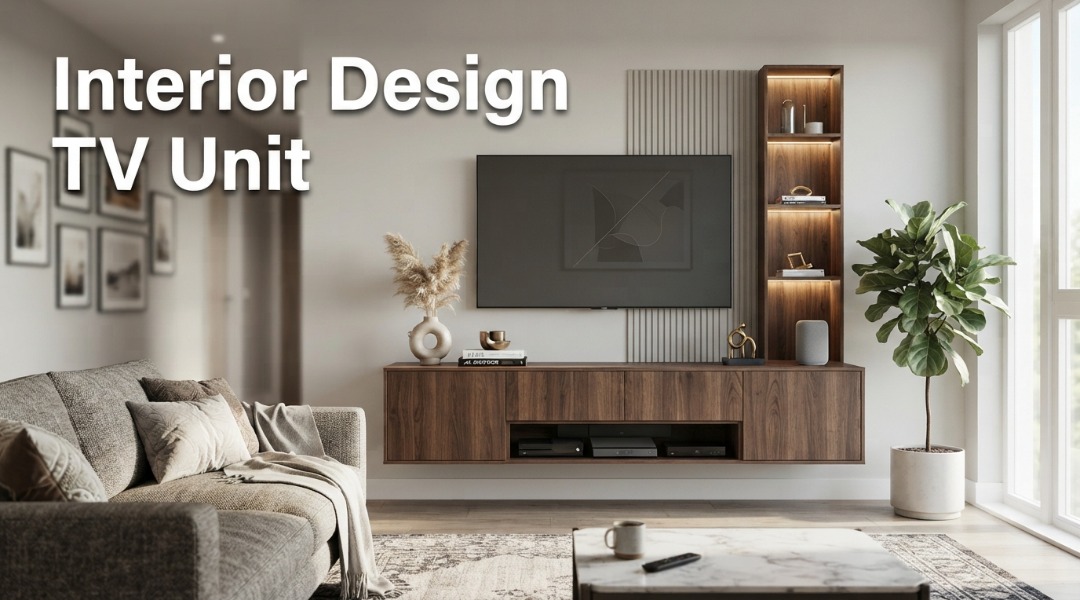
Walk into any apartment in Dhaka lately, and you’ll notice the clunky wooden TV cabinet that once dominated living rooms is disappearing. In its place, sleek wall-mounted panels, floating shelves, and built-in media walls are taking over. An interior design TV unit isn’t just furniture anymore. According to AND Academy, a big trend for 2026 will be the floating TV unit, which combines practical perks with clean design.
Not exactly what you’d expect: whether you’re building a new home in Gulshan or updating a flat in Mirpur, how you handle the TV wall changes the whole room’s feel.
- Floating TV units lead the 2026 design trends: they make compact rooms feel larger and keep wires hidden.
- Mixed materials like fluted wood, stone, and LED backlighting create a custom architectural look without full built-in construction.
- Plan cable conduits during electrical rough-in; retrofitting hidden channels later costs more and looks worse.
Table of Contents
- What Is an Interior Design TV Unit?
- Materials, Textures, and LED Backlighting
- Cable Management and Hidden Storage
- People Also Ask
- Choosing the Right Interior Design TV Unit for Your Home
What Is an Interior Design TV Unit?
An interior design TV unit is a built-in or freestanding structure that houses your television, media equipment, and decor while concealing cables and providing storage. Unlike a basic TV stand, it integrates the screen into the room’s architecture as a deliberate design feature rather than a functional afterthought.
Across the board, here’s another angle. If you just set a TV on a regular cabinet, wires trail down the back, the console sits exposed, and remotes, controllers, and router boxes pile up around it. A proper TV unit fixes all of that by integrating storage, cable routing, and visual balance into a single piece.
In Bangladeshi homes, where living rooms all the time pull double duty as entertainment spaces and guest areas, this matters more than the majority realize. A well-designed unit hides your WiFi router; stores board games; displays family photos; and frames your 55-inch screen without making the wall feel crowded. It also avoids the common interior design mistakes most homeowners make, like leaving wires visible or choosing storage that doesn’t fit your actual needs. This detail matters more than it might seem right now.
Why Does Your TV Unit Choice Matter So Much?
It all goes back to that earlier idea: if you think about it, your living room walls set the tone for the whole apartment. When the TV area looks like an afterthought, the whole room feels unfinished. Users again and again report that floating units make smaller living rooms feel lighter and more open; that explains their surge in popularity across compact urban apartments in 2026.
Materials, Textures, and LED Backlighting
Mixed material TV walls combine two or more surfaces like fluted wood, stone, metal, and glass to create depth and architectural interest. LED backlighting adds ambient glow behind the screen, making the media wall feel more premium without adding visual clutter.
Now, the move away from plain painted walls continues. In most cases, pairing warm walnut with cool stone, or combining textured paneling with smooth glass shelving, crafts contrast that makes the screen feel integrated rather than dropped onto a blank wall.
If you think about it, in local practice. Teak and walnut finishes from timber suppliers in Dhaka, stone-effect laminates from brands like Merino, and fluted MDF panels from local carpenters are usually used. Just as kitchen design for Bangladeshi homes depends on locally available materials and skilled labor, your TV wall needs the same grounding in what’s actually obtainable and buildable.
Perceived Room Spaciousness by TV Unit Type (scale 1-10)
How Do You Mix Wood, Stone, and Metal Without Clutter?
Realistically, by most accounts, choose one dominant material and let the others play supporting roles. Use stone only for a narrow accent strip or a shelf edge.
If your main panel is walnut, metal should appear in small doses, like trim or bracket details. If too many loads of materials share equal visual weight, the wall looks like a showroom sample board rather than a home.
Think about how textures interact with light. It’s worth noting that fluted wood casts different shadows than smooth laminate; that contrast makes mixed materials feel rich instead of busy. SRV Interiors notes that the latest TV unit designs take lighting to a new level with smart, ambient LED backlighting. The strip sits behind the TV or along panel edges, adding depth and mood without competing with the screen.
Cable Management and Hidden Storage
Cable management in a TV unit means routing all visible wires through internal conduits or hidden channels built into the wall or cabinet structure. This creates a clean, finished look where power cords, HDMI cables, and router wires stay completely out of sight.
One industry source puts it bluntly:
“Make sure your TV wall design ideas have internal conduits to hide wires.”, House Gyan
The single most common complaint about TV walls is visible cables ruining an otherwise expensive-looking installation. If you skip planning, your electrician may run a standard outlet behind the TV. While your carpenter builds the cabinet without coordinating, the result is wires running across the wall since no one planned the conduit route before the drywall went up. Surprising, not really.
For larger walls where you’re already thinking about decorating a large living room wall, plan cable routes together, though you decide the decorative layout.
What’s the Biggest Mistake People Make with TV Walls?
Ask yourself – this reflects what I mentioned a while ago. Chances are, you already know the biggest mistake is retrofitting cable management after the unit is installed.
Is it worth it though? Looking closer, once your walls are closed and your unit is mounted, adding hidden conduits demands cutting into finished surfaces.
Plan the cable routes during electrical rough-in, before the carpenter starts building.
Then again, then again; run a vertical conduit from behind the TV down to a junction box at waist height. So every wire travels inside the wall; wait, let me rephrase, and exits where you can’t see it.
The same logic applies to storage, and design roundups show strong demand for space-saving units that combine display, storage, and decor. Closed cabinets with push-to-open mechanisms hide clutter instantly; open niches display hand-picked objects. The balance between the two decides whether your interior design TV unit looks styled or messy.
People Also Ask
These are the questions homeowners ask most often when planning a TV unit installation in their living room.
Should I Choose a Floating or Floor-Standing TV Unit?
Choose floating units for smaller rooms where floor space is tight. Floor-standing units work better when you need maximum storage or have walls that can’t support heavy mounting.
On a slightly different note, floating units make compact living rooms feel less heavy and more open, according to user feedback. But if your walls are hollow brick or thin plasterboard, a floor-standing unit with wall-mounted upper sections gives you the (and that implies quite a bit) look without structural risks.
Are Open Shelves Worth the Maintenance in a TV Unit?
Open shelves look great in photos but collect dust quickly in real life, especially in cities like Dhaka where air quality adds to the cleaning burden.
Closed storage with a few open display niches gives you the styled look without committing to weekly dusting. Use open shelving for three or four hand-picked objects, not a whole library of books and decorative pieces.
How Much Does a Built-in TV Wall Cost in Bangladesh?
A custom built-in TV wall in Bangladesh usually ranges from about 45,000 to 150,000 taka depending on materials, size, and complexity.
For the average user, painless floating units with laminate finishes sit at the lower end. Full media walls with stone cladding, LED integration, and custom cabinetry climb higher; labor in Dhaka runs lower than in many markets. But imported stone or premium wood adds up rapidly.
Will LED Backlighting Work with Any TV Unit Design?
LED backlighting works with most modern TV unit styles, but it needs to be planned during the electrical phase rather than added later.
The strip sits behind the TV or along panel edges, adding depth and mood without competing with the screen. Smart LED systems that change color temperature based on the time of day add another layer of functionality.
Choosing the Right Interior Design TV Unit for Your Home
The best interior design TV unit balances aesthetics with storage and wire concealment rather than just looking decorative. Pick a style that fits your room size, matches your materials, and handles cables before installation, not after.
“A big trend for 2026 will be the floating TV unit… [with] practical benefits.”, AND Academy
That’s the real bottom line: style without storage and cable management is just decoration. The units that hold up over time; or rather, are the (at least based on current observations) ones that solve practical problems. While looking like they belong in the room.
If you’re working with a tight budget, start with a wall-mounted floating shelf system and add closed storage below. If you want the full media wall look, budget for professional installation and plan your electrical routing before any carpentry begins. If you’re planning other large wall decor ideas, your TV unit should coordinate with those choices rather than compete with them.
- Measure your wall and TV, Record wall width, ceiling height, and TV diagonal before choosing any unit style.
- Plan cable routes, Run vertical conduits during electrical rough-in, before the carpenter starts building.
- Pick a dominant material, Choose one main surface like walnut or stone, then add accents sparingly.
- Balance open and closed storage, Use closed cabinets for clutter and a few open niches for curated display pieces.