
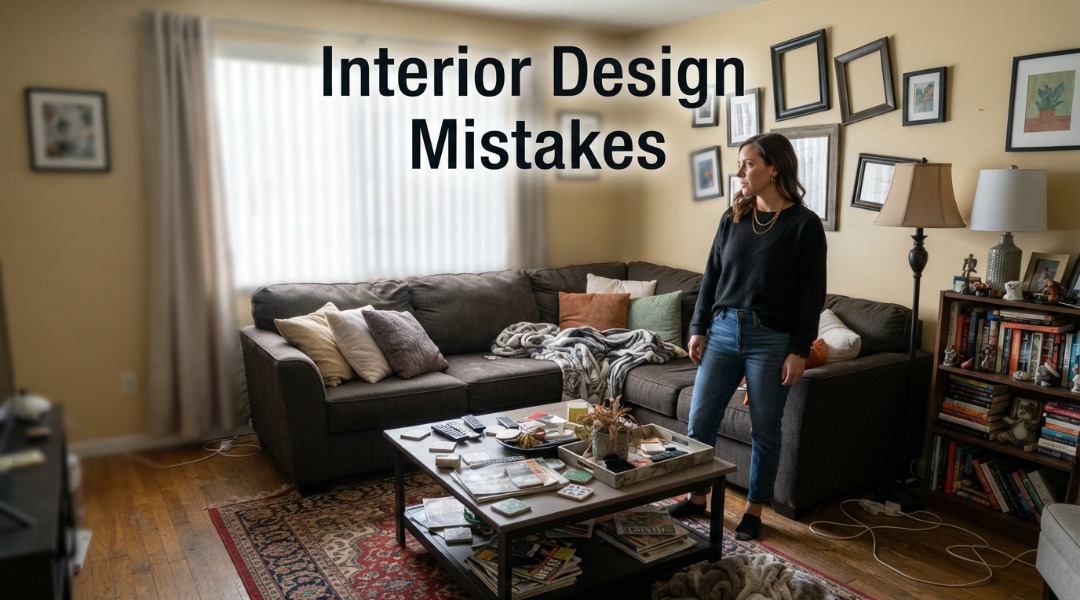
The most common interior design mistakes don’t start with ugly paint. They start in the first two weeks.
When a sofa arrives, the rug looks tiny, and the living room feels like a waiting area. If you’re a first-time homeowner in Dhaka or Chattogram, tight floor space and real BDT costs make every buy riskier. This guide orders seven common interior design mistakes from easiest to hardest to undo.
You can address the cheap ones first and avoid the expensive regrets. This detail matters more than it might seem right now.
You might already feel some doubt before buying. That’s normal. Recent complaints point to the same pattern: clutter, awkward traffic flow, and pieces that look great online but fail in real rooms.
- Wrong furniture scale and undersized rugs are the most repeated interior design mistakes across recent expert guides, so measure before ordering.
- A single overhead light flattens a room; add floor and table lamps to create layered lighting.
- Trend-heavy permanent finishes age fast, while poor outlet positions and airflow cause daily frustration that is expensive to reverse.
Table of Contents
- 1. Buying Furniture Before You Measure the Room
- 2. Treating One Overhead Light as Enough
- 3. Designing Around Trends Instead of Real Life
- 4. Pushing Every Chair and Table Against the Wall
- 5. Skipping Storage Until the Mess Arrives
- 6. Matching Every Finish, Fabric, and Color Too Closely
- 7. Forgetting How Humidity and Power Outlets Change Daily Life
- Fix These First: The Most Expensive Mistakes
- People Also Ask
- FAQs
Key Point
If you’re skimming, focus on these.
- Measure the sofa and rug on your actual floor with masking tape, not the online catalog photo.
- Add two extra light sources before repainting.
- In Bangladesh, plan outlets and airflow early because humidity and mobile charging affect daily life more than wall color.
1. Buying Furniture Before You Measure the Room
Furniture scale is the most common interior design mistake noted in recent expert guides. Buying a sofa or rug without measuring creates cramped or empty rooms, and returns are rarely cheap in Bangladesh.
Mark the footprint on your floor with painter’s tape before you order. In a standard 14 by 18 foot Dhaka living room, leave at least 18 inches of walking space on two sides of the sofa. A rug should sit under the front legs of seating, not float as a tiny island. The same rule applies in bedrooms; master bedroom interior design choices fail, and. When a tall bed blocks the door.
Measure the room and size furniture and rugs to fit the space before buying. It prevents returns and rooms that feel off.
What does furniture scale actually mean?
By most accounts, scale is the visual and physical size of furniture relative to the room, ceiling, and nearby pieces. A tall cabinet in a 10 by 11 foot bedroom makes the space feel shorter. While a banquet-sized sofa blocks the door.
Mentions Across Six Expert Guides (count)
2. Treating One Overhead Light as Enough
One overhead light leaves a room flat, harsh, and uneven after sunset. Layered lighting- ambient, task, and accent sources- makes the same space useful for reading, eating, and relaxing.
Most Dhaka apartments come with a single center fixture. Add a floor lamp near the sofa and a small table lamp on a sideboard. So industry guidance says layered lighting improves comfort and makes rooms feel more usable at different times of day.
One overhead light usually leaves shadows where you need task light most.
How do you layer lighting without spending a fortune?
Start with the ambient source you already have, then add a task lamp. Where you read and (at least in many practical scenarios) an accent lamp for texture. You don’t need ceiling rewiring; plug-in fixtures and rechargeable LED lamps work in load-shedding homes.
3. Designing Around Trends Instead of Real Life
Permanent finishes powered by trends, like glossy tile or a single accent wall, often look dated in two or three years. Trend-led design ages fast when applied to fixed surfaces, tile, or built-in cabinets.
Now, use trends in cushions, removable wallpaper, and small decor. Because you can swap them cheaply. For floors and cabinets, pick neutral bases. This matters more in Bangladesh.
From what you’ll see, where humidity and dust punish terrible-quality finishes anyway.
Design for how you actually live, not for the newest trend on your feed. Flexible pieces can carry the style; permanent surfaces should carry the room.
4. Pushing Every Chair and Table Against the Wall
Shoving all seating against walls kills conversation and makes a room feel longer, colder, and disconnected. Pull pieces away by 8 to 12 inches to open the layout.
In compact Dhaka living rooms, floating furniture can feel wasteful, but it usually isn’t. Create a clear 30 to 36-inch circulation path around major pieces instead of leaving dead space in the center. You might be wondering: why? If chairs face each other across a coffee table.
5. Skipping Storage Until the Mess Arrives
Storage is the interior design mistake homeowners feel every single day. Build closets, cabinets, and hidden spaces early because clutter appears fast in humid, dusty cities.
Bangladeshi kitchen interior design stresses ventilation and closed shelving for exactly this reason.
What if you already have zero storage built in?
Add freestanding cabinets, bed boxes, and wall-mounted shelves before blaming the layout. Closed storage works better in high dust areas than open display shelves.
6. Matching Every Finish, Fabric, and Color Too Closely
A room where every wood tone, fabric, and cushion matches exactly feels staged, flat, and impersonal. Mix textures and tones while keeping one common color temperature or material thread.
This is exactly what that first point leads to; in real-world terms, use three wood tones: one dominant, one secondary, one small accent. Add texture through jute, cane, cotton, and one high-contrast piece. Local handloom textiles and terracotta can do this without turning your flat into a showroom. For wall spaces, large wall decor ideas for living rooms work better after you settle the main furniture.
7. Forgetting How Humidity and Power Outlets Change Daily Life
Ignoring local climate and outlet placement creates expensive, hard-to-reverse regrets. Poor outlet positions, slippery glossy floors, and sealed storage choices are among the toughest mistakes to fix later.
Consider this. In Bangladesh, glossy floor tiles get slippery in monsoon season. Choose non-slip matte or semi-matte finishes for main rooms. Place extra outlets near sofa sides, bed heads, and kitchen counters before the electrician leaves.
A charging point beats an extension cord across the floor.
People Also Ask
What is the most common interior design mistake?
Furniture scale and proportion problems show up more than any other issue. A sofa or rug that’s the wrong size makes a room feel cramped or empty even when the colors are fine.
How do I know if my rug is too small?
Practically speaking, stand back and check whether the rug touches the front legs of your seating. If it sits alone in the middle like a placemat, it’s too small. Front legs on the rug is a safe baseline.
Should I follow interior design trends?
Keep in mind what we talked about earlier, only in flexible items like cushions, art, and removable wallpaper. Permanent finishes should stay neutral. Because trend-led choices can look dated within two or three years.
Can poor lighting be fixed without rewiring?
Yes. Add plug-in floor lamps; table lamps; and rechargeable LED lamps. Layered lighting improves comfort and makes rooms usable at different times of day without an electrician.
Why do rooms look cluttered even when clean?
Open shelves and floor-level storage often set up visual noise. If daily items have no closed home, flat surfaces become drop zones and (more on that later) traffic paths shrink.
FAQs
How can first-time homeowners avoid buying the wrong furniture size?
In real-world terms, measure the actual room, mark footprints with tape, and double-check door widths before ordering. A sofa that can’t pass through your Dhaka apartment corridor becomes a delivery problem, not a design one.
What mistakes are hardest to fix after moving in?
Then again, outlet placement, wall finish choices, and layout decisions top the list. Flooring and built-in storage are costly to change. So plan those before paint and decor.
Do I need an interior designer to fix these mistakes?
No. Most fixes are measuring, adding lamps, and editing clutter. A professional helps when layout, electrical, or built-in work is involved.
Fix These First: The Most Expensive Mistakes
Begin with furniture scale; it controls traffic flow and how every other piece sits. Next, fix lighting; it changes how you face the room every evening. Storage and outlet placement matter more than color trends.
The most expensive mistake isn’t a single chair; it’s designing around a photo instead of your daily route from door to balcony. Measure, light, store, and leave breathing room, and the space will feel right even before you paint.
- Measure your floor, Mark sofa and rug footprints with masking tape before ordering.
- Layer two extra lights, Add a floor lamp and a table lamp to your sitting room.
- Inspect outlet positions, Note where you charge devices and add sockets before painting.
- Choose non-slip flooring, Use matte or semi-matte surfaces for monsoon safety.
- Add hidden storage early, Build closed cabinets for shoes, prayer mats, and cleaning tools.