Most renovation budgets in Bangladesh now cluster between Tk 10 lakh and Tk 30 lakh. That’s real money. It’s exactly why you can’t afford to confuse cost with value. The two concepts pull you in opposite directions.
One path chases the lowest upfront price. The other path pursues long-term returns, durability, and daily comfort. If you guess wrong, you either overspend on things nobody notices, or you save now and pay later through endless repairs.
This article puts the two approaches head to head: Cost-First Interior Design versus
Value-First Interior Design. By the end, you’ll know precisely when to pinch pennies and when to push the budget.
- Choosing the cheapest materials often backfires in Bangladesh’s humid climate, where poor-quality finishes can fail within two monsoons and cost more to replace than the initial savings.
- A value-first strategy allocates at least 70% of the budget to kitchens, bathrooms, and storage, while using lower-cost décor and phased purchases for secondary spaces.
- Professional planning reduces expensive layout mistakes, and many designers access trade discounts of 20% to 60% below retail, improving total value if they pass the savings through.
Key Point
- Kitchens command the highest median spend at $24,000 globally; in Dhaka, a well-planned modular kitchen often returns more daily comfort and resale interest than any other room.
- Online design services, starting around $159, give you expert layout guidance without full-service pricing, a smart middle ground for budget-conscious owners.
- The biggest hidden cost driver isn’t the designer’s fee; it’s the markup on furnishings, commonly 20% to 40% over trade cost, so ask for a transparent sourcing structure early.
- Durability in high-traffic zones isn’t optional: a bathroom done cheaply will leak or stain within a year, and fixing it later costs roughly triple the original saving.
Table of Contents
- Cost-First vs Value-First Interior Design at a Glance
- What Is Cost-First Interior Design?
- What Is Value-First Interior Design?
- Head-to-Head Round: Upfront Spending
- Head-to-Head Round: Durability and Maintenance
- Head-to-Head Round: Resale Impact
- Which Should You Choose?
- Common Mistakes When Chasing the Lowest Price
- People Also Ask
- FAQs
Cost-First vs Value-First Interior Design at a Glance
Both paths can finish a room. The difference shows up six months later, when the first monsoon hits, when the drawer slides start sticking, or when a buyer walks through and either falls in love or walks out.
| Attribute | Cost-First Approach | Value-First Approach |
|---|---|---|
| Typical project floor | Tk 2–5 lakh for a full flat | Tk 10 lakh and above, with kitchens/bathrooms often driving the total |
| Material grade | Entry-level laminates, thin veneers, local hardware | Marine ply, water-resistant boards, branded fittings with warranties |
| Durability expectation | 2–4 years before visible wear | 8–15 years with basic upkeep |
| Design input | Self-planned or copy-paste from neighbors | Professional space planning, custom storage, lighting design |
| Hidden costs | Frequent repairs, early replacement, repainting | Higher upfront but lower per-year cost over a decade |
| Resale boost | Minimal; buyers notice cheap finishes instantly | Noticeably higher, cohesive style and quality materials attract better offers |
What Is Cost-First Interior Design?
It’s the approach that asks “What’s the cheapest way to get this done?”, and then stops there.
Cost-first design treats interiors as a one-time expense to be minimized. You’ll see it in flats where every fitting comes from the local market’s lowest bidder, where the kitchen shutters warp after a season, and where walls need repainting within two years. The logic is simple: save cash today because tomorrow’s problems can wait.
I’ve walked through enough new apartments in Dhaka to recognize the pattern. The owner proudly says they furnished the whole place for Tk 3 lakh. But look closer: the wardrobe hinges are already loose, the bathroom silicone is peeling, and the floor tiles sound hollow when you tap them. That owner just bought themselves a maintenance headache.
Who it works for: landlords who won’t live in the unit, short-term flippers who exit within a year, or families with truly no margin. For everyone else, the math breaks down fast.
What Is Value-First Interior Design?
Value-first design spends money where it earns its keep; every taka must justify itself through better function, longer life, or higher resale.
This isn’t about splurging on Italian marble. It’s about recognizing that a kitchen used three times a day deserves plywood that won’t bubble, that a bathroom exposed to constant moisture needs proper waterproofing, and that built-in storage transforms a cramped flat into a livable home. According to Houzz’s 2026 data, kitchens command a median spend of $24,000 globally, not because homeowners love spending, but because the room’s daily impact justifies the investment.
You’ll often hear value-first homeowners say things like “I’ll do the bedrooms later” or “Let’s get the layout right first, décor can wait.” They phase the work. They hire a designer for the critical planning stages but might source decor items themselves. The single biggest difference: they measure cost per year of use, not cost at the point of purchase.
“The strongest cost-vs-value argument favors visible, daily-use spaces with broad resale appeal, especially kitchens, bathrooms, and main living areas.”
Head-to-Head Round: Upfront Spending
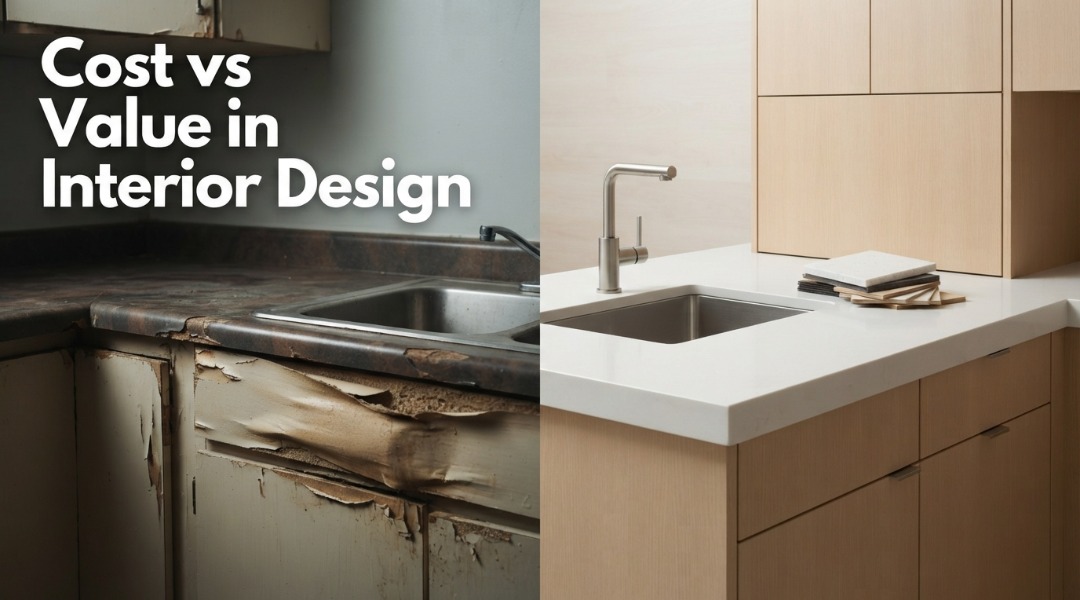
Cost-first wins on the quote sheet. Value-first wins on the bank balance three years later. The cheapest kitchen in Dhaka might cost Tk 80,000. A value-oriented version with marine ply, soft-close hinges, and a proper backsplash runs Tk 2.5 lakh. That’s a gap of Tk 1.7 lakh. Stings, right?
Now calculate the replacements. The cheap kitchen’s shutters sag after two years. The laminate peels. You call a carpenter, spend Tk 30,000 on repairs.
Two years later, the countertop stains permanently. Another Tk 40,000.
Within six years, you’ve spent more than the difference, and you’ve endured constant frustration.
Round winner: Value-First. Cheaper at the start doesn’t mean cheaper overall. The numbers tilt hard once you account for Bangladesh’s climate and the reality that cheap materials rarely survive a full monsoon cycle without damage.
How much does a value-first kitchen actually cost in Bangladesh?
Expect to spend Tk 1.5–3 lakh for a mid-range kitchen with durable materials and proper hardware. That’s well above the entry-level Tk 80,000 but aligns with long-term thinking. If you’re doing a full flat, the all-in cost for a value-oriented renovation often lands between Tk 8 lakh and Tk 15 lakh, with kitchens and bathrooms absorbing roughly half of that.
Head-to-Head Round: Durability and Maintenance
You don’t need a lab test to see the difference. Live in a cost-first flat for two years, and the evidence screams at you from every corner.
In Bangladesh, humidity hovers around 70–80% for much of the year. MDF boards swell, laminates peel, cheaper paints chalk. Value-first design uses materials rated for these conditions: marine ply for kitchen cabinets, water-resistant boards for bathrooms, and anti-fungal paints for exterior-facing walls. The upfront premium?
About 30–40% on materials. The payoff? You skip the repair cycle entirely.
I remember inspecting a bathroom done with ordinary gypsum board. Within one rainy season, the ceiling had sagged, and black mold crept along the edges. The fix required tearing everything out, a Tk 50,000 job, to correct what a Tk 8,000 upgrade in material would have prevented.
Round winner: Value-First. No contest. The climate makes this round especially lopsided in South Asian contexts.
Head-to-Head Round: Resale Impact
A cost-first interior might look fine in photos. But in person, buyers notice. And they discount accordingly.
When a buyer walks through a flat, they touch surfaces. They open cabinets. They check bathroom fittings. If the kitchen shutters wobble, they mentally subtract Tk 2 lakh from their offer.
If the bathroom smells of damp, they subtract more. Value-first design eliminates those negotiation points. A cohesive, well-maintained interior signals that the owner cared, and that the next owner won’t inherit a list of urgent repairs.
Real estate agents in Dhaka routinely estimate that a well-designed flat with quality finishes sells 8–12% faster and commands a 5–10% price premium over a comparable unit with basic interiors. That premium alone can exceed the entire extra cost of the value-first approach.
Round winner: Value-First. The resale math is overwhelming, especially in competitive neighborhoods like Gulshan, Banani, or Dhanmondi.
Which Should You Choose?
The right answer depends entirely on how long you plan to stay and how much daily frustration you’re willing to tolerate.
Choose Cost-First if:
- You’re furnishing a rental unit you won’t live in.
- Your timeline is under two years, and you plan to sell quickly.
- Your budget is so tight that any overage means debt.
Choose Value-First if:
- You’ll live in the home for five years or more.
- You want the kitchen and bathroom to work without weekly repairs.
- You care about resale and want to command a premium when you sell.
For most families reading this, living in their own flat, raising children, cooking daily, the value-first path isn’t optional. It’s the only financially rational choice.
Common Mistakes When Chasing the Lowest Price
Even smart people fall into these traps. I’ve watched them happen.
- Buying everything at once without a plan. Impulse purchases rarely match. You end up with a jumble of styles and pieces that don’t fit the space, forcing costly rework later. Phased buying works better, and it’s a strategy we discuss in our guide on how to interior design a room.
- Ignoring layout and lighting. A cheap sofa in a well-lit, well-proportioned room looks far better than an expensive one in a poorly planned space. Investing in a few hours of professional layout advice, even through online design services starting around $159, prevents costly furniture mistakes. Many of our clients who skipped this step later discovered their new sofa blocked a doorway.
- Choosing materials by price alone. As we detail in our coverage of common interior design mistakes, the cheapest tile often chips within a year, while a mid-range option lasts a decade with zero maintenance.
- Over-investing in décor while skimping on structure. Fancy curtains don’t fix a leaking bathroom ceiling. Prioritize the bones of the house first.
Typical Interior Design Project Costs in Bangladesh (BDT)
People Also Ask
Can I get good value on a tight budget?
Yes, by focusing on layout, lighting, and storage first and postponing décor and luxury finishes. Online design services offer professional floor plans for a fraction of full-service fees, and Bangladesh has many skilled carpenters who can build durable plywood cabinets at competitive rates. The key is to spend on things you touch daily- door handles, drawer slides, faucets- and save on items you simply look at.
How do I know if a designer’s markup is fair?
Ask for a transparent breakdown: what’s the trade price, what’s the markup percentage, and what alternative sourcing options exist. Industry data shows designer markups commonly range from 20% to 40% over trade cost. If a designer can’t explain why the markup exists, perhaps it covers warehousing, quality checks, and installation coordination- you might be better off sourcing those items yourself.
Is it cheaper to buy materials locally in Bangladesh?
Often yes, especially for wood, tiles, and sanitaryware where local brands like RAK Ceramics or Fu-Wang offer good durability at lower prices than imported equivalents. But for specialized hardware like soft-close hinges or German drawer systems, importing through a designer who gets trade discounts of 20% to 60% below retail can actually be cheaper than buying locally at full mark-up.
What’s the single biggest value-killer in interior design?
Poor waterproofing and moisture management. In Bangladesh’s climate, a single leaky bathroom can destroy cabinetry, flooring, and even the ceiling below. Spending an extra Tk 15,000–25,000 on proper waterproofing during construction saves Tk 1–2 lakh in damage repairs later.
Does spending more always mean better value?
No, spending more on the wrong things (trendy wallpapers, fragile decorative items) adds cost without value. Value comes from directing extra budget toward structural elements: better plywood, higher-grade tiles, branded electrical fittings, and professional space planning. A higher budget is wasted if it buys fragility instead of durability.
FAQs
How much should I budget for a value-first interior in Bangladesh?
Plan to spend roughly 15–20% of your property’s current market value on interior design for a full flat, with kitchens and bathrooms taking the largest share. For a 1,200 sq ft apartment in Dhaka worth around Tk 1.2 crore, that translates to a design budget of Tk 18–24 lakh, which allows durable materials and professional planning.
Can I mix cost-first and value-first approaches?
Absolutely, that’s what smart homeowners do. Spend value-first on permanent, high-impact areas (kitchen, bathrooms, built-in wardrobes, flooring), and go cost-first on easily replaceable elements like wall paint, accent furniture, and décor. Phased implementation lets you spread spending while living with completed core spaces.
What’s the most common regret after a cost-first renovation?
“I wish I’d spent more on the kitchen.” That’s the refrain I hear constantly. The daily frustration of a poorly organized kitchen, sticky drawers, peeling laminate, inadequate storage, far outweighs the initial saving. It’s the one room where cutting corners reliably backfires.
Are there any areas where cost-first genuinely wins?
Guest bedrooms and storage rooms that see minimal use can often be finished with lower-cost materials without noticeable downside. Because these spaces experience little wear, the durability gap matters less. But even there, avoid the absolute cheapest option; at least use paint that won’t flake within a year.
How do I find a designer who will prioritize value over luxury?
Look for someone who talks about plywood grades, waterproofing details, and maintenance realities, not just color palettes and imported marble. Interview at least three designers, ask for examples of budget-conscious projects they’ve done, and request a sample bill of quantities so you can see exactly where money gets allocated.
- List your top three daily-use rooms, these get the value-first budget; everything else can be phased or done cost-first.
- Get at least three itemized quotes, compare not just totals but the specific material brands and thicknesses proposed.
- Ask each vendor for a 5-year cost projection, including installation, expected repairs, and replacement cycles.
- Hire a designer for the layout and material specification only, then manage procurement yourself if you want to avoid markups.
- Start with the kitchen and one bathroom, complete those to a high standard before touching any other room, so you immediately experience the value difference.