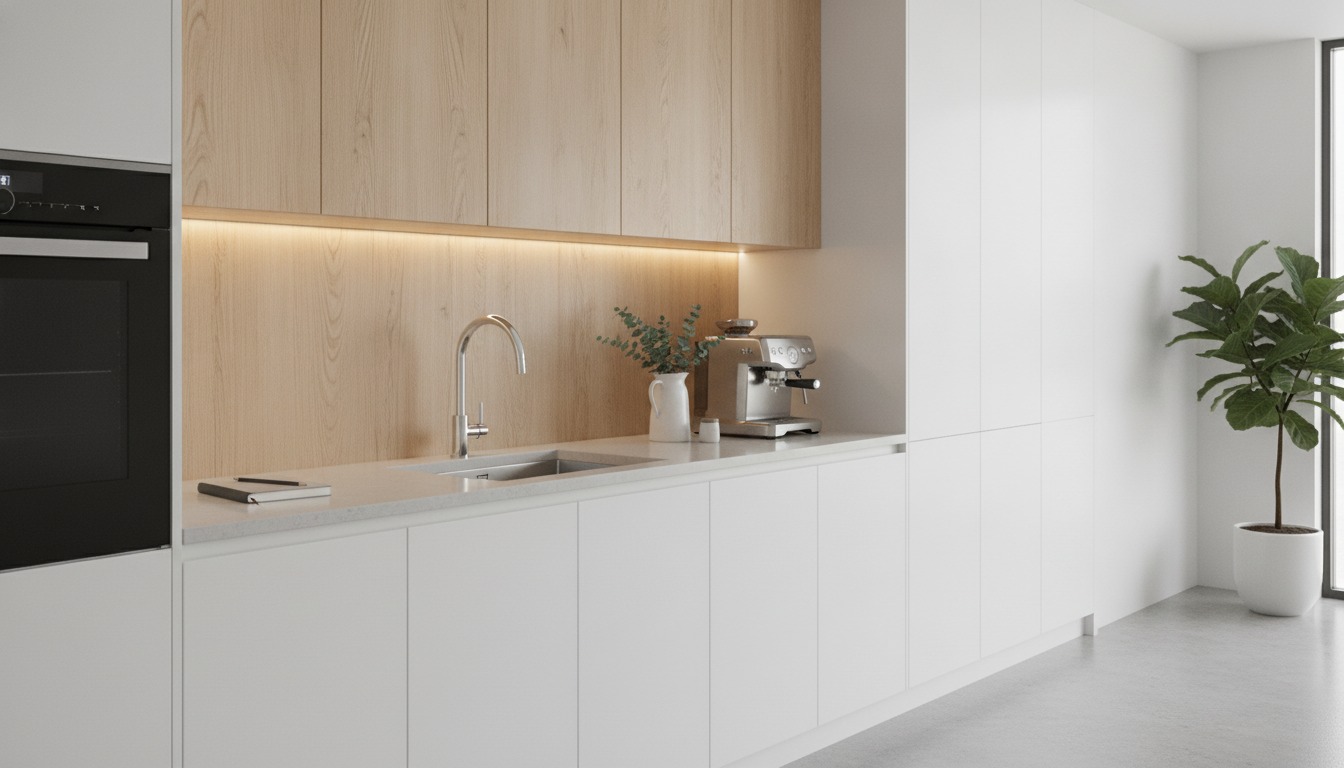
If you plan to remodel your kitchen space in Dhaka or Chittagong this year. You’ve likely stared at hundreds of glossy social media photos featuring smooth, handleless cabinets and rich oak finishes.
It makes sense why these styles grab your attention. Across Bangladesh, kitchen design preferences shifted dramatically heading into 2026. A challenging truth remains that showroom sales representatives won’t tell you.
Kind of surprising, right? Most of these imported European aesthetics fail miserably during our humid monsoon season. Unless you protect them with an incredibly specific local shielding strategy.
Then again, let us dissect the actual performance of these modern trends, and buying a cabinet without handles might seem like a sleek upgrade for a tight apartment. Yet, if the neighborhood kids end up slamming their sticky fingers, no. Scratch that, all over the bare timber daily, you might quickly regret the choice. You might be wondering, why?
Before you hand over a deposit to a contractor. Let’s look at what actually survives daily cooking in Bangladesh.
Natural wood finishes like light oak and ash are rapidly replacing white cabinetry, but they require a heavy marine sealer to survive the intense humidity of Bangladesh’s monsoon season.
- Handleless, push-to-open cabinet door mechanisms look exceptionally clean in tight urban apartments. However, they often frustrate children and elderly family members who struggle with the exact physical pressure required to pop them open.
- Two-tone layouts (specifically pairing dark lower cabinets with lighter uppers) along with mixed materials like wood and natural stone offer high visual depth while keeping your material costs surprisingly manageable.
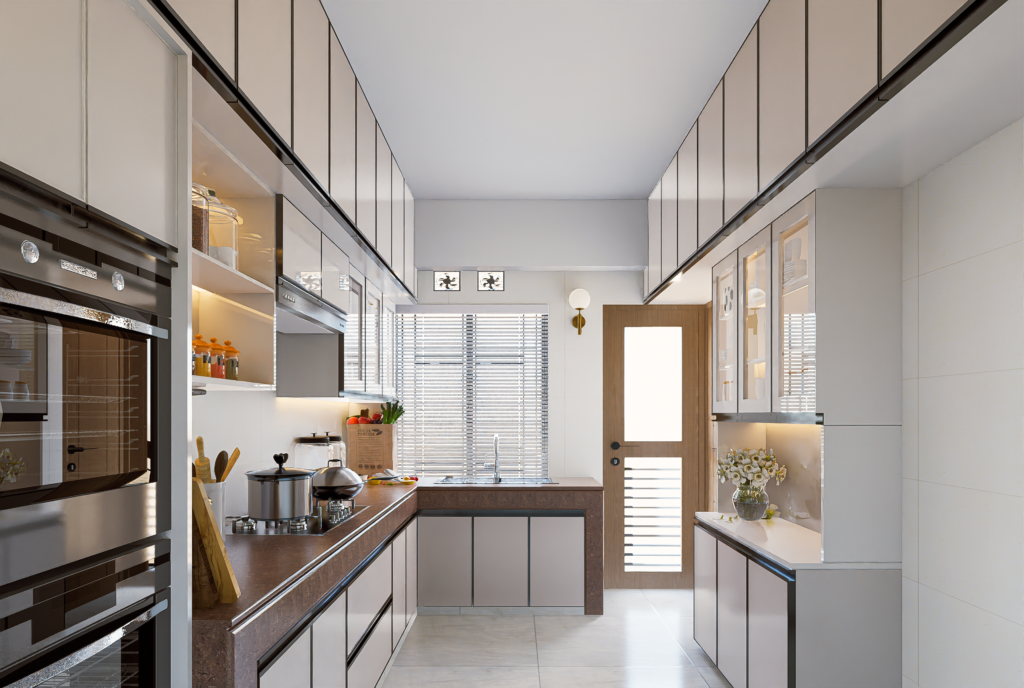
Table of Contents
Pros & Cons of 2026 Cabinet Design Trends
Keep in mind what we talked about earlier, consider this practical perspective. Walk into any high-end kitchen showroom in Banani or Gulshan right now and you’ll see matte surfaces, warm wood textures, and hidden hardware everywhere.
The market data proves this isn’t just a passing aesthetic phase; according to the latest House Kitchen Trend Study — which is why you’ve probably wondered the same thing. Not the easiest thing to wrap your head around. That’s a massive shift in consumer preferences. For years, white gloss acrylic ruled supreme. Now, homeowners want tactile organic textures.
You’ll see how this ties into the previous point, but installing these trends in a typical Dhaka apartment brings a. Okay, more accurately, a unique set (which works out well in practice) of structural issues. Having tracked multiple local residential projects over the past year, I’ve — well, actually, documented the practical advantages and hidden drawbacks of these modern styles.
Advantages–Warmth of Natural Wood: Light ash and oak veneers offer a rich texture that paint simply cannot replicate. Dust also blends into these grains far better, which is incredibly useful given Dhaka’s constant airborne grit.
- Matte surfaces hide minor scratches elegantly; a soft matte finish avoids harsh light reflection and conceals smudges far better than high-gloss laminate.
- Integrated push-to-open fronts save space: Removing bulky handles creates a clean profile that visually expands an 80-square-foot kitchen layout.
- Mixing materials allows deep personalization, meaning you can pair textured wood veneers with engineered quartz backsplashes without paying for a completely custom Italian import.
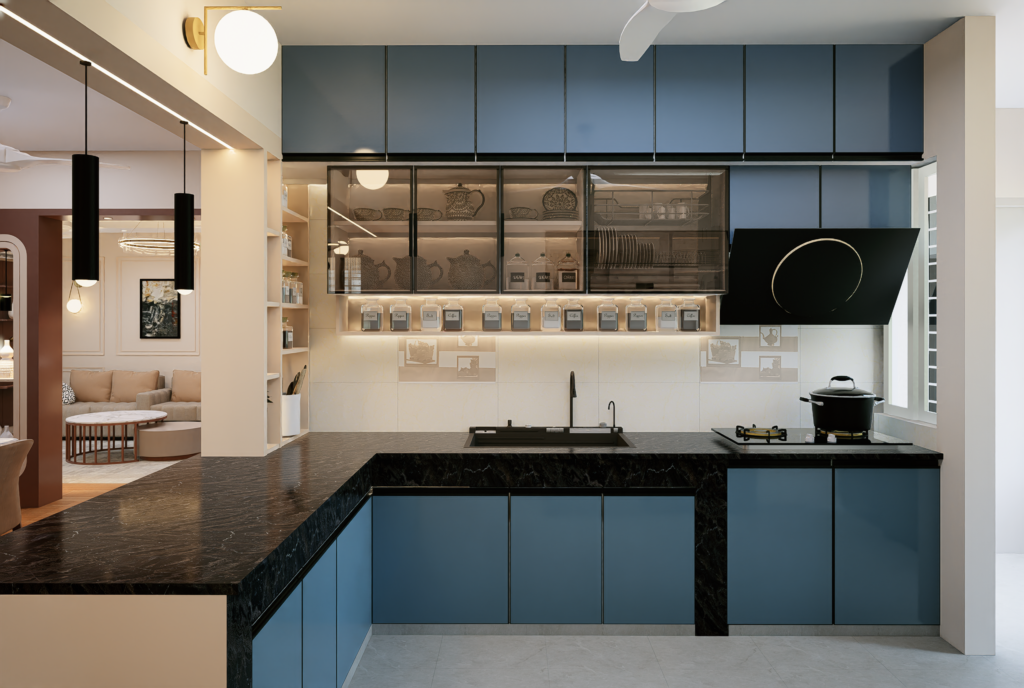
- Two-tone paint schemes define spaces: Painting your lower cabinets a deep forest green and your upper cabinets a warm cream creates a clear, functional separation between prep zones and cooking areas.
- Smart storage features solve everyday annoyances; interior drawer charging docks and touchless LED strip lighting keep your counter space clean.
Cons–Water ruins raw wood quickly: If your local carpenter skips the dual-coat polyurethane sealant, expect the wood around your sink to warp and swell within six months.
- Handleless doors frequently irritate users; young toddlers cannot reach the push points easily, and elderly family members often feel confused about where to press.
- Matte materials hold onto greasy stains: Although matte surfaces hide minor scratches, a simple splash of hot mustard oil or masoor dal requires immediate scrubbing to prevent permanent staining.
- Combining different materials raises labor costs; aligning a wood cabinet flush with quartz countertops and aluminum trim demands highly skilled labor, which typically increases local contractor fees by 20% to 30%.
- Smart accessories fail over time: Motorized cabinet doors look incredibly slick until the small actuator motor burns out, forcing you to wait three weeks for a replacement part to arrive from Guangzhou.
Real-World Performance & My Verdict
In practice, under daily kitchen use. My own custom setup features a light ash wood slab door protected by a matte clear coat. Who would have thought? Paired with a deep navy blue lower section. After six months of heavy daily cooking. The wood hasn’t shown any signs of water swelling.
Just last month, however. A major water spill near the dishwasher went unnoticed for a few hours. It left a faint, slightly dark watermark near the baseboard; if you find yourself in a similar spot. Wipe the area dry immediately with a microfiber cloth; don’t leave the water to sit.
That’s the fundamental compromise of choosing real wood veneer.
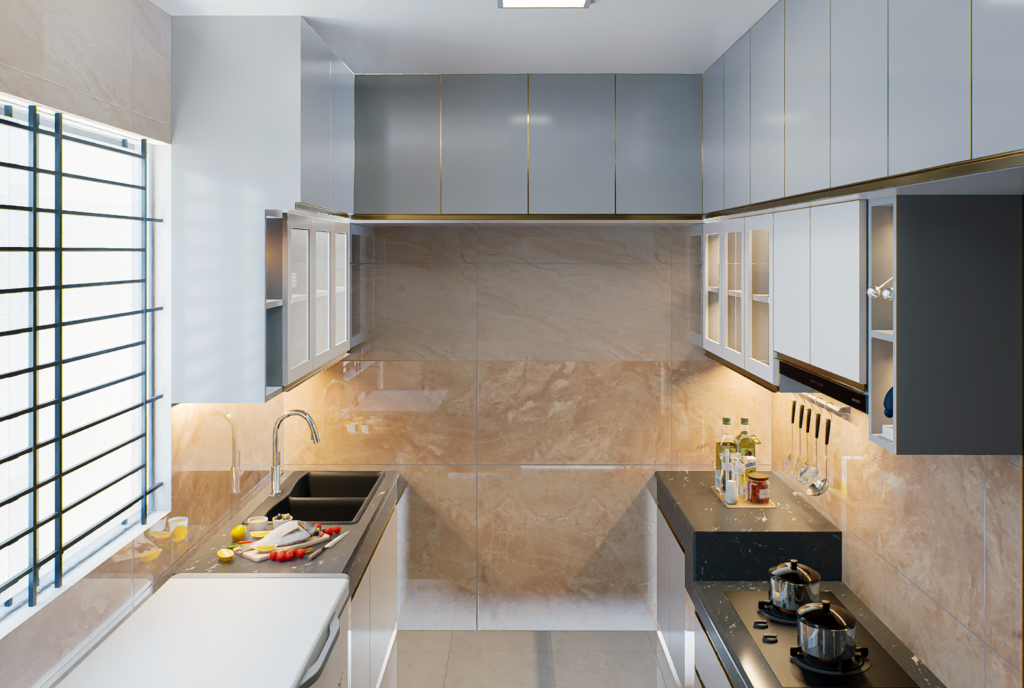
In practical terms, consider this design approach: choosing greige upper cabinets combined with matte charcoal bottom units reduces overall visual clutter. While preventing the upper section from turning yellow under warm ceiling lights.
Pay attention to this part — which is why, in contrast, cheap white gloss laminates all the time peel near the heat of a gas (more on that later) stove within two years. Recently, I toured three apartment buildings in Mirpur. Almost every glossy white cabinet setup looked faded. Cloudy and visibly worn down by heat.
Which cabinet finish actually lasts in Dhaka’s humidity?
In most scenarios. Paying an extra Tk 5,000 to Tk 8,000 to apply a premium matte clear polyurethane sealer over real wood veneer is absolutely worth the money.
To tie that together, blocksep matters. Look at how professional designers handle this.
One interior designer who manages roughly 15 high-end residential renovations every year in Gulshan told me that mixed-material setups now make up nearly half of her project portfolio. She often pairs a ribbed wood finish on an island with a smooth finish.
Painted cabinets on the back wall.
By doing this, the visual contrast of different textures becomes the. You know what, the main design feature is eliminating the need for expensive imported cabinet pulls.
Applying this simple design trick saved me thousands on solid brass cabinet hardware.
You’ve probably noticed that visual contrast helps define specific cooking zones. This is incredibly valuable in open-plan Dhaka apartments. Where the kitchen blends (more on that later) directly into the dining room.
Are two-tone cabinets a passing fad or a solid investment?
For high-traffic family kitchens. The two-tone design strategy serves a practical purpose that goes far beyond a breezy aesthetic.
Context matters immensely here; using lighter colors on top and darker shades on the bottom is a clever spatial trick that architects use to make low-ceiling apartments feel much loftier.
Now, here is what one local apartment owner shared on Reddit:
“Two-tone cabinets made my kitchen look bigger and more modern — without any structural change.”
Taking a step back here, the underlying point remains clear. On closer inspection. It indeed. But let’s look at the reality of adding smart features like motorized doors. Or integrated charging ports.
If you don’t plan the electrical conduit routing before the plastering stage. Adding them later will be incredibly messy, eating up a massive portion of your interior budget.
But are there simpler, cheaper ways to modernize your cabinets?
Should you add smart charging ports and LED sensors to cabinets?
Instead of overcomplicating your wiring. Simply mount a motion-activated LED strip light under your wall cabinets. It’s a much more practical solution.
But then again, my perspective comes from living with a two-tone — which is why I chose a matte-finish wood kitchen for a full year. My cabinets don’t have any handles, except for the heavy spice drawer. And honestly, given the choice. I’d select the exact same layout again.
What does that mean in practice? Now, just make sure you apply marine, wait. Let me rephrase: varnish to seal the sink cabinet interior. Before the plumbing goes in, rather, wait, let me rephrase, than waiting for your first pipe leak.
Learn from the mistakes I made early on.
On average, if you seal it with at least two coats of high-grade moisture-resistant lacquer. Now, avoid cheap softwoods like pine; instead, use seasoned marine plywood faced with teak or ash veneer (which aligns with standard practices). What happens when you do?
The raw, unbanded edges are the weakest point. As they’ll quickly absorb moisture. And swell during the monsoon season (and the data generally agree) if left exposed.

People Also Ask
Are natural wood kitchen cabinets a good choice in Bangladesh’s humid climate?
In practice, the dynamic changes slightly. And sure enough, let’s look at this with some realistic skepticism. A premium European push-to-open hinge from brands like Blum or Hettich easily lasts for more than 60,000 opening cycles.
That rating only applies. If the door is hung perfectly. If your local carpenter installs them poorly or uses excessively heavy wood panels, the mechanisms will fail within months.
Most of the time. These specialty touch-latches add roughly Tk 3,000 to Tk 4,000 per cabinet door.
Yes, matte surfaces are much better at hiding fingerprints. And fine urban dust than high-gloss acrylic sheets. This is an incredibly practical benefit for homes in dusty cities like Dhaka.
The catch is that matte finishes demand speedy action when grease splatters. Keeping a microfiber cloth handy for a blazing daily wipe will prevent stubborn oil stains from setting.
Do handleless kitchen cabinets break easily?
For a standard 80-square-foot kitchen, installing basic laminated slab doors with mid-grade hardware will run you between Tk 1,50,000 and Tk 3,00,000.
Is a matte finish better than a gloss for kitchen cabinets in a dusty area?
In practice, the dynamic changes slightly. Expect to pay an extra Tk 50,000 to Tk 1,00,000. Read that again if you need to. If you opt for natural wood veneer instead of laminate. This detail matters more than it might seem right now.
That puts the actual investment into perspective, which is why using imported matte clear coatings and high-end European push-open hardware. Along with multi-material details, it can easily push your total project cost (which makes perfect sense logically) past Tk 4,00,000.
How much do modern kitchen cabinets cost in Bangladesh?
What does that mean in practice? The fundamental design rule for compact apartments is direct. Pair deep charcoal or navy lower units with soft taupe. Or warm white upper cabinets. Avoid entirely dark color schemes without abundant natural light. They’ll make your kitchen feel like a cramped closet. At least, that outlines the core theory.
Which cabinet color combination works best for small Bangladeshi apartments?
Combining soft gray or cream uppers with deep forest green. Or, charcoal lower cabinets create an illusion of height. This palette keeps the space feeling bright and airy; you should avoid dark colors on top. Unless your kitchen has massive windows to (which completely makes sense logically) balance the shadows.
- Use marine-grade plywood as your core material — Paying a premium upfront prevents your cabinet carcasses from warping when moisture levels spike during the summer.
- Test a touch-latch mechanism before you buy — Buy a single hinge and have your family try it out at home to ensure everyone can operate it easily.
- Insist on double-sealing all raw veneer edges — Ask your carpenter to apply two coats of clear moisture-resistant sealer to every exposed edge, particularly under the sink area.
- Stick to a two-tone layout featuring pale upper cabinets — This layout maximizes natural light reflection and visually separates your kitchen from adjacent living spaces.